A language camp is a tiny adventure away from home
“When I turned 6 my dad signed me up for a Junior French language camp in Flône” says Alixe (age 17). “When the camp was over, he may have noticed that I discovered my passion by spotting the unlikely grin on my face. In the meantime, I joined over 10 camps and I also want to become a teacher.”
“Ever since I was little, it was clear to me that I like to read, chat, and learn, also in a foreign language. Outdoors I was not the most vocal child and I feared making mistakes, but Roeland changed that for the better. Like so many other kids I blossomed at camp, and my dare to speak took giant leaps forward. My first language vacation was a huge win, just like the succeeding camps in Bure, Marche-en-Famenne, Virton and Sutton.”
“I inherited the love for language and the Roeland language camps from my dad. His entire youth he took part in them. So, when I was old enough to go, he told me that he had been incredibly happy during so-called “Roeland summers”. Getting acquainted with a foreign language is refreshing, and you meet friends for life there.”
“As for myself, I would like to be a part of the nostalgia, magic, and joy at Roeland camps for as long as I possibly can. That is why I want to become a teacher. From many of the camps I went to I kept certificates, workbooks, letters and a variety of souvenirs. These camps have an invisible force that keeps luring me in.”
How do you feel about the obligation to speak only in a foreign language at camp?
“I am convinced that speaking only in a foreign language makes the experience so much more real and intense. You are being pushed out of your comfort zone and you have to keep trying. The same rule applies to the other participants, which creates a strong bond.”
‘You meet people in a foreign language, and you get to meet them all over again when you are on the bus home, when speaking your mother tongue.’
‘In my opinion, the love for language can be instigated or deepened by the memories connected to a camp experience and the people you have met there.’
‘Also, you replace your native language with some sort of a host-language: you talk, sing and dream in the new language. When you get home, you switch back to your mother tongue, which gives you a nostalgic feeling and a yearning for the next camp.’
What did you learn at camp?
“One of my favourite moments is the ‘deep talks’, during siesta, with my trusted group of friends and our magnificent teachers. Wonderful people, all of them, filled to the brim with sound advice. One of them said something that will stay with me forever: We are just people who want to learn something’. There is no pressure to be the best, and no one is concerned with that. We’re here to have a fun time, and while we’re at it, we realize that communicating in a foreign language can also be a source of joy.”
“After a couple of days, you don’t even notice you are speaking in a foreign language. It grows on you and it feels comfortable to do. At camp, you are surrounded by friends who help you out – and vice versa.”
“You get used to speaking a foreign language really quick, partly because of the playful language labs, the activities, workshops and field trips, but especially because of group dynamics. A language camp feels like a large, cosy family away from home.”
Do you dare to speak more often in a foreign language now?
“After language camp, I no longer associate a foreign language with classes and schools and memorizing chunks of theory. Language now mainly stirs nostalgic feelings and warm memories, which is definitely a motivation to be more actively engaged with languages.”
“From time to time, I find myself in a situation that makes me think about the language camp. And you are eager to show what you did learn there. So, the language camps stimulate you to speak a foreign language more often.”
What are your coolest memories of the language camps?
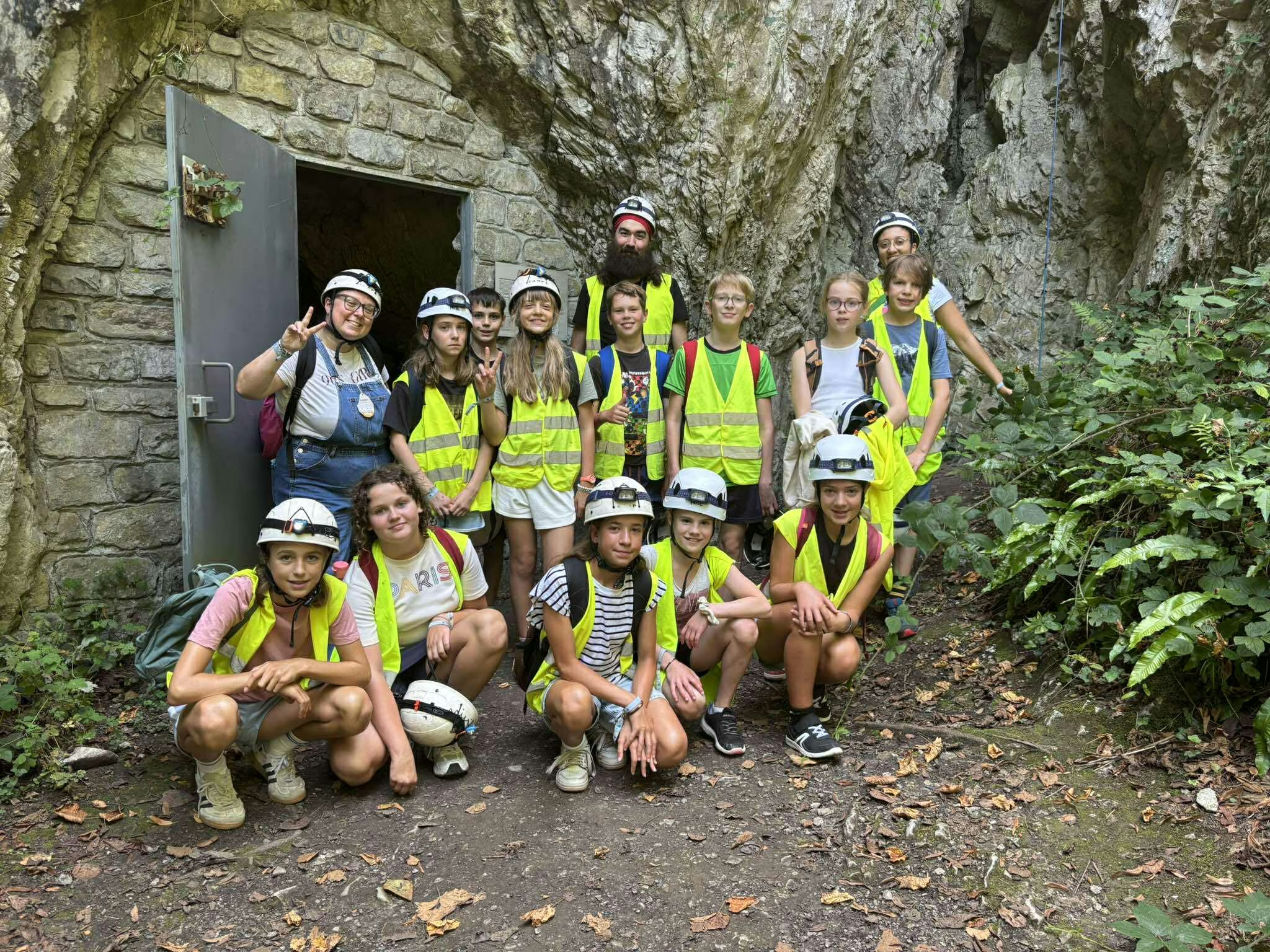
“I always look forward to the field trips when you step out of the trusted camp spot to discover a part of the world. That is when you really get in touch with everyday life, and you experience how a language is used on a daily basis. You no longer feel like a tourist, and you start to feel at home. Engaging in a short conversation with the local people is a clever way to try and hide the fact that you are a tourist. When on a field trip, it is time to put what you learned at camp to effective use. It is your ‘time to shine’.”
Do you also notice the positive influence from the camp at school?
“I want to speak up more in class now. There is a sense of pride you want to share with your surroundings. Also, the teachers are quicker with positive feedback after you went to a language camp.”
“Many of the Roeland teachers speak only in a foreign language. Which means that you can learn from them the correct pronunciation, you learn the difference between formal and informal language and they introduce you to proverbs and expressions.”
“In short, your knowledge of a foreign language gets a boost, just by spending a couple of days with your friends. Exercising, singing… Just by having fun in a new and intriguing language.”
“Surrounded by all the beautiful memories I cherish, I honestly believe that these camps are worth their while. From the moment you get on the bus, until the final camp day: you will be guided by enthusiastic teachers, invigorating smiles and great activities. I did not regret for a single moment going to these language camps. I am grateful that they are a sizeable part of my youth.”